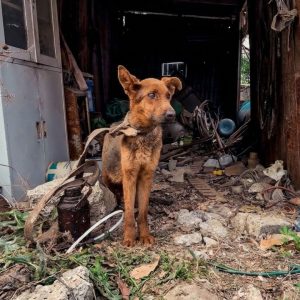
In a forgotten corner of a run-down backyard, surrounded by broken tools and rusted machinery, a large dog named Arizona lay hidden from the outside world. For two months, she had been left completely alone on the property, cast aside after spending her life being used repeatedly to produce litter after litter of puppies.
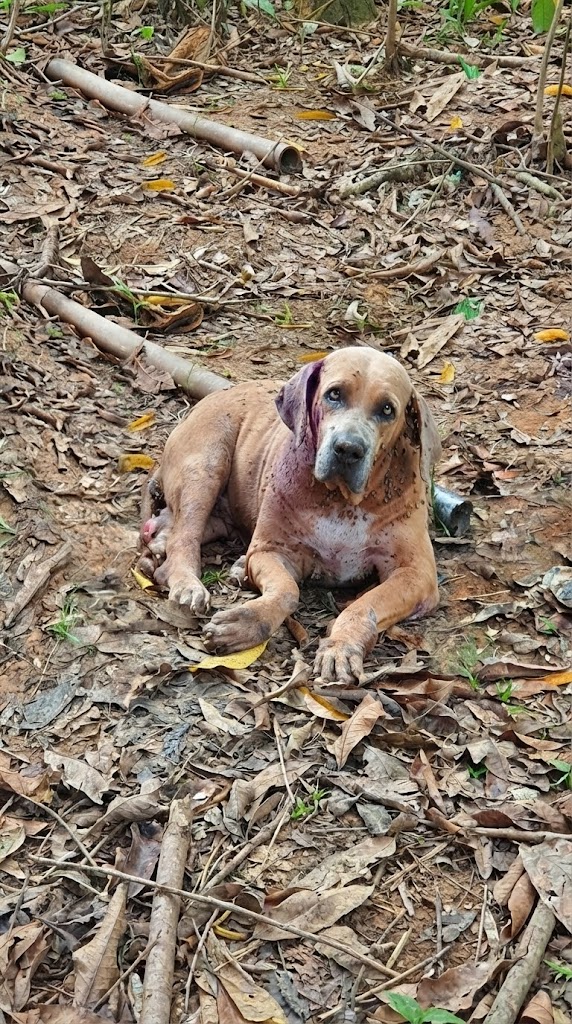
The long weeks of isolation and severe neglect had taken a heavy toll on her body. All four of her legs were badly swollen and covered in untreated sores, while a dense infestation of ticks around her face and ears made it difficult to even see the skin underneath.
When a local rescue team received an urgent call from someone nearly out of breath describing the dog’s condition, they gathered their equipment and hurried straight to the address. Finding Arizona depleted and unable to escape the cluttered yard on her own, the rescuers gently lifted her into their vehicle and rushed toward the veterinary clinic, uncertain whether her weakened body could withstand how much she had already lost.
VIDEO: Watch Rescuers Carefully Carry Arizona Away From the Yard Where She Was Left Behind
Hours of Careful Work and a Fragile First Night
As soon as Arizona was placed on the examination table, the veterinary team began piecing together the story her body was telling. Beneath the immediate signs of starvation and exposure, it was clear she had carried the physical strain of multiple litters over the years, only to be abandoned once she could no longer produce puppies.
Before the doctors could address her deeper internal needs, they had to relieve the constant discomfort on the surface of her skin.
For several hours, veterinarians and clinic staff worked side by side in quiet concentration, painstakingly extracting the parasites from around her ears and face while cleaning the neglected wounds along her legs.
Even with her coat cleared and her sores treated, Arizona remained in critical condition. Because the prolonged parasite infestation had left her severely anemic, she required immediate blood transfusions just to stabilize.
Given her large frame, a single transfusion was not enough; the medical team had to administer more than two full bags of blood to give her body the strength to keep fighting.

At the same time, the doctors faced a difficult question regarding her swollen, heavily infected legs. The tissue damage was so extensive that the veterinary team worried openly about whether they could save all four limbs, or if she might lose one of her legs before the infection could be brought under control.
“When an animal has spent years giving everything its body had to offer, survival often depends on whether someone finally steps in to give something back.”
A Custom Surgical Plate After One Month of Care
Because her recovery was expected to be both long and complicated, the rescue team reached out to the public for help with her mounting medical expenses. The response from the community was immediate, with people stepping forward to contribute directly to her care and share her story so the clinic could continue her treatment without hesitation.
With no set date for when she might be well enough to leave, Arizona settled into the daily rhythm of the veterinary hospital.
Day after day, the staff gave her gentle medicated baths to soothe her skin, offered bowls of nutrient-rich food to rebuild her wasted muscle, and kept her on a steady course of medication to clear the remaining infections. Little by little, the severe swelling in her paws subsided, and her skin began to heal cleanly.
Yet even as her overall health improved, the veterinarians noticed that Arizona still struggled to walk properly whenever she tried to move across the floor.
A series of closer mobility evaluations revealed the underlying reason for her hesitation: the tendons in her damaged leg had suffered severe injury, preventing the limb from supporting her weight.
One month after she was carried out of that cluttered backyard, Arizona underwent a critical orthopedic procedure. Using funds raised by the people following her recovery, surgeons fitted her injured leg with a custom-designed plate built specifically to support her damaged tendons and stabilize her stride.

Three Months in the Clinic and a Family Waiting at the Door
The surgery went smoothly, and as the incision healed over the following weeks, the medical team noticed a shift that went beyond her physical mobility. For the first time since arriving at the hospital, the guarded, exhausted tension around Arizona’s face began to fade.
When caregivers approached her recovery space, her expression softened into a relaxed, open look—what the staff described as her very first smile.
After spending so long alone among rusted tools and debris, she had begun to recognize and lean into the steady affection of the people caring for her each day.
By the time Arizona was finally cleared for discharge, nearly three full months had passed since the afternoon she was rescued. Her coat was clean, her wounds had closed, and the custom plate in her leg allowed her to stand and walk with newfound steadiness as she prepared to step outside the clinic doors.
She did not have to wait long to find a permanent place to belong.
Shortly after completing her medical care, Arizona was welcomed into a home with new adoptive parents and several resident pets of their own. Rather than feeling overwhelmed by the change, she settled smoothly into the household, surrounded by human caregivers and animal companions who greeted her with immediate warmth.

No longer valued for what she could produce or left behind in the corner of an empty yard, she now spends her days resting comfortably at the center of a full, attentive home.
“After a lifetime of being treated as a means to an end, the quietest relief for an older dog is simply being loved for existing.”