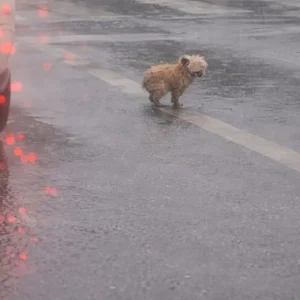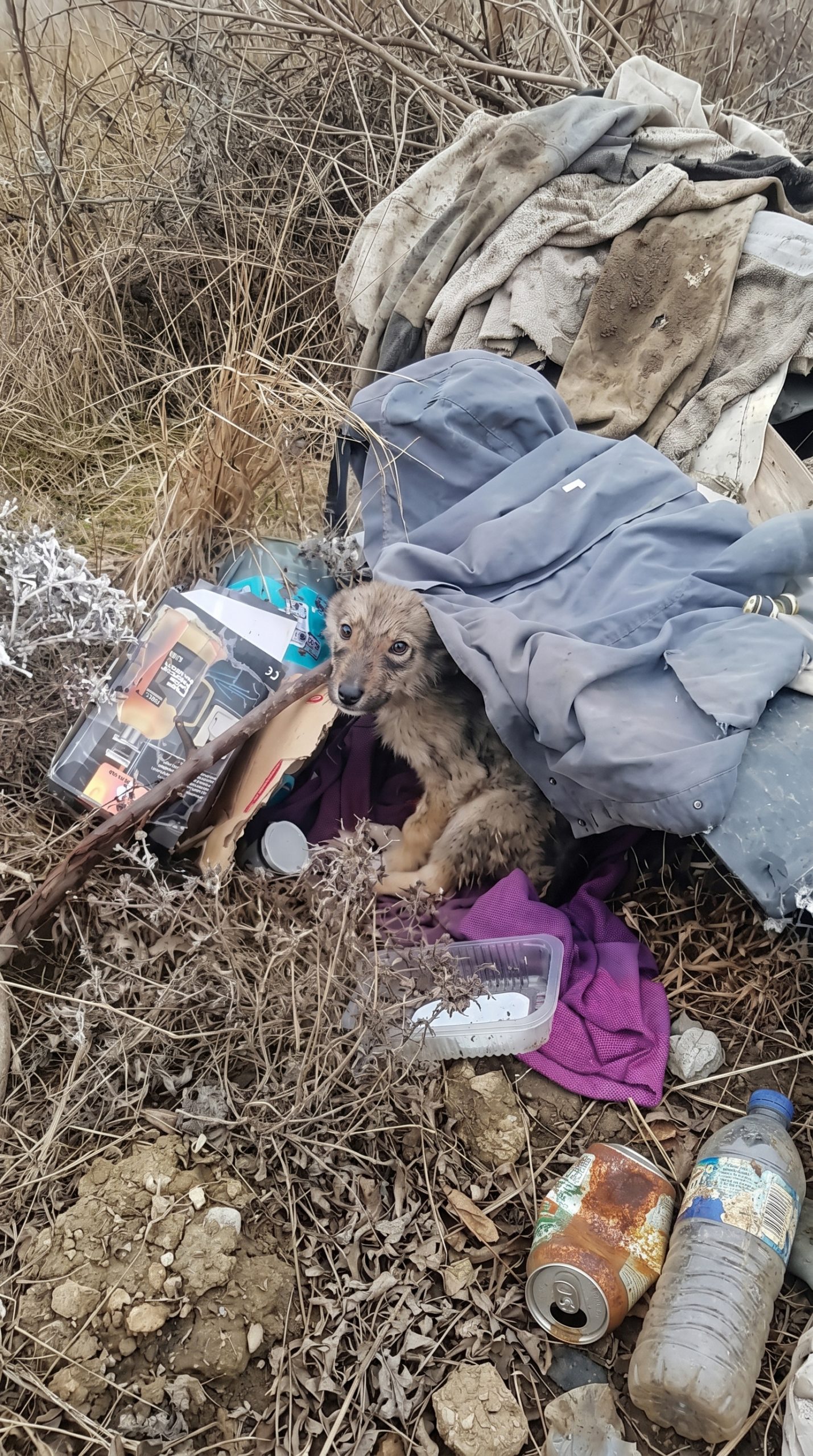
Out in an open field beside a chilly roadway, a tiny puppy named Littlefoot lay completely alone in the cold. After a sudden disaster separated him from his entire family, the young pup had been left behind in the exposed grass with no mother to keep him warm and no littermates to curl up beside.
Pressed against the damp ground, his small body was shivering and eerily still. Even with the danger of the nearby road just steps away, he made no attempt to scramble to his feet or search for shelter, held in place by a physical exhaustion that went far deeper than the cold air around him.
His solitary wait finally ended when someone captured a video of the stranded puppy and sent it to a local rescuer, who hurried out to the field to bring him to safety. Yet once gentle hands lifted Littlefoot from the roadside grass and brought him indoors, it quickly became clear that his struggle to move wasn’t just from the chill—leaving his caregiver to uncover what was truly holding his tiny legs back.
VIDEO: A Lone Puppy Found Shivering Beside a Road Receives the Care He Needs to Stand Strong
Why His Small Legs Could Not Carry Him
For a puppy who had just survived being stranded alone in the cold, a warm resting spot and a quiet room were only the beginning of what he needed.
As his rescuer watched him closely, a troubling pattern quickly emerged. Whenever Littlefoot tried to shift his weight or follow movement across the floor, he lagged behind, his small frame struggling to cooperate with even the simplest motions.
Standing up—something a young puppy should be able to do with effortless curiosity—clearly caused him discomfort.
A thorough evaluation soon revealed the reason behind his painful hesitation. Littlefoot was suffering from a severe case of rickets, a condition that had left his developing body without the structural support it needed.
Because of the illness, the tendons and ligaments in his legs had grown far too soft and elongated to hold up his own body weight. Every time he tried to bear weight on his limbs, his weakened joints gave way beneath him, turning ordinary movement into a tiring, painful effort.
“Sometimes the hardest battles a young animal faces are the invisible ones written into a body that never received what it needed to grow.”
Looking back at the video of Littlefoot lying motionless in the field, his rescuer realized just how vulnerable the puppy had been. Left alone after losing his family, his fragile legs had given him no way to walk away from the road or search for help on his own.

The Quiet Advantage of a Growing Body
Seeing how severely Littlefoot’s tendons and ligaments were affected made it clear that his recovery would require more than a few days of rest. At first, there was even a possibility that the little dog might eventually need surgery to help his limbs support his weight.
Yet amidst all the challenges stacked against him, Littlefoot still had one quiet advantage working in his favor: his youth.
Unlike an older dog whose bones and connective tissues have already fully set, a young puppy’s body is still developing every day. His rescuer knew from experience that young animals are capable of remarkable physical changes when they are finally given the right support at the right time.
Instead of losing hope over how much he lagged behind, his caregiver focused on building a comprehensive plan to help his growing body heal from the inside out.

Small Steps Toward the Life Ahead
Helping soft ligaments and fragile tendons gain strength is not a change that happens overnight. For Littlefoot, the path forward is built on three steady pillars: specialized nutrition, targeted medical treatments, and patient physical training.
For a puppy who spent his early days depleted and alone in a cold field, simply having bowls of specially formulated food set down in front of him marks a vital shift. Each meal is designed to supply his growing frame with the exact nutrients he was missing when he was on his own.
Alongside his diet and ongoing treatments, gentle training sessions are carefully structured to help his legs learn to carry his weight without pushing him into pain.
The contrast between his past and his present is already unmistakable. He is no longer an overlooked figure freezing beside a roadway with no family left to protect him.

Now, while his body does the slow, steady work of growing stronger, Littlefoot is surrounded by warmth, specialized care, and patient hands guiding him toward the happy, active life waiting ahead of him.
“A young life interrupted by hardship does not need perfection to heal—only the time, nourishment, and steady guidance it was denied at the start.”