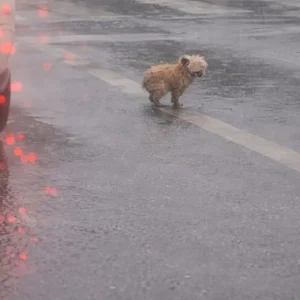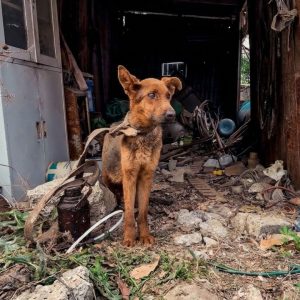
For five years, a gentle neighborhood dog named Red existed only as a memory. Back in 2019, after spending his days happily greeting local children, he suddenly vanished; his former owner told neighbors he had fallen ill and been taken to a vet, only to quietly bring a new dog home a few weeks later.
Time moved on, until one afternoon when a woman walking down a familiar street felt something brush softly against her legs. Looking down, she froze as an older, thinner dog with paralyzed hind legs dragged himself toward her, wagging his tail with fragile recognition—it was Red, still alive after five long years on his own.
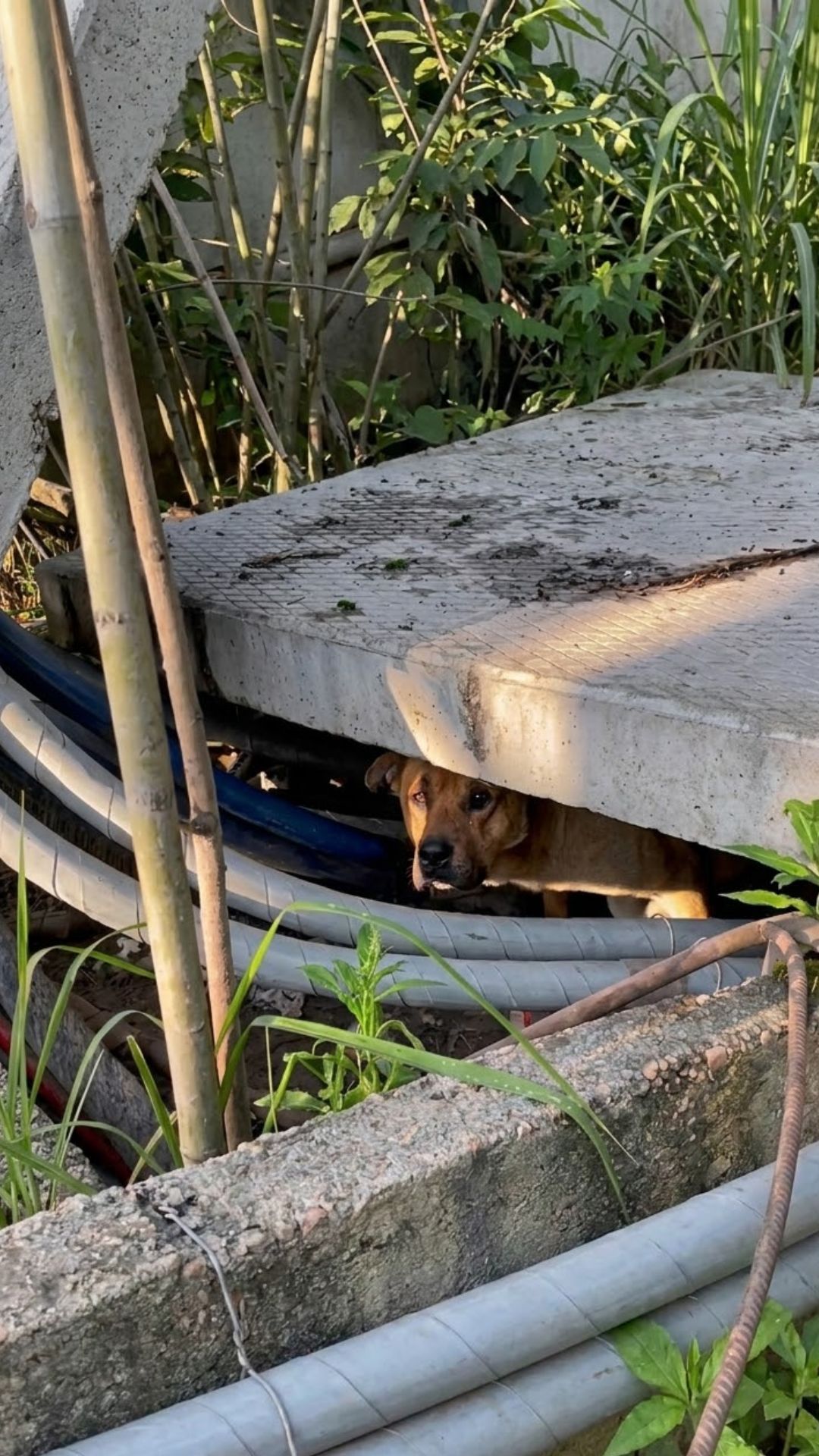
When local rescuers arrived to help, Red had retreated into a hiding spot, his body tense and caught between the desire to be seen and the fear of being hurt. With slow, patient coaxing, he allowed the team to gently bring him out without a single growl or snap, trembling quietly as they lifted him toward the medical help he had gone years without.
VIDEO: Dog Missing for Five Years Crawls Out of Hiding When He Recognizes a Familiar Neighbor
A Fragile Thread at the Hospital
As the rescue team pieced together how Red had survived for so long, a quiet routine of endurance came to light. To stay safe, he had spent his days tucked out of sight where he was eventually found, only dragging himself out after dark to search the streets for food while his former owner was ultimately reported to the authorities.
At the veterinary clinic, the initial examination revealed why he could no longer walk. Red was suffering from severe intervertebral disc disease that had paralyzed his back legs, complicated by an extensive infection damaging several of his vertebrae.
The veterinarians urged an immediate transfer to a specialized animal hospital two hours away. After the long drive, the specialists gave him priority care, though their assessment was honest: with damage this advanced, a full recovery was possible, but unlikely.

Still, there was one small detail during the exam that kept the medical team and rescuers from losing heart. Red could still register pain in his lower body, and he could still move his tail.
“Sometimes, the smallest physical response is enough to tell you that a body hasn’t given up trying.”
The first stage of his hospital stay required days of intravenous fluids and high-dose antibiotics to clear the deep infection in his spine. Through every procedure, Red remained completely gentle, though his eyes stayed alert and watchful—observing the room cautiously as if waiting to see whether these people would disappear too.
Two Months to a Shaky Stand
For weeks, the hospital staff monitored Red’s lower body for any sign of progress, treating every slight muscle twitch or shift of weight as a meaningful milestone. Red accepted their care patiently, occasionally looking up at his handlers with a quiet, steady gaze.
Then, two months into his treatment, the routine in his recovery room changed in an instant.
On his own, Red pushed himself up onto all four paws. There was nothing smooth about the movement—his hind legs trembled heavily beneath him, and his balance was unsteady—but for the first time in years, he was standing.
The room went completely quiet before filling with relief from the people who had watched over him for sixty days. Even as his strength returned, however, Red’s old habits of survival lingered.
He often hesitated to step outside his small enclosure, still associating hiding with staying safe. Rather than forcing him forward, his caretakers relied on predictable routines and gentle reassurance until he began to trust that the open floor was safe.
Guided by a physical therapy specialist, Red began working through daily rehabilitation exercises. Day by day, his shaky posture gave way to stronger steps and steadier balance.

Sunlight After Years in the Shadows
Four months after being found on the street, Red reached a milestone that went beyond the walls of the clinic. He was finally strong enough to go out for his first real walk.
As he stepped through the doors into the open air, warm sunlight touched his face, and he tilted his head up toward the sky. For a dog who had spent years hiding during the daylight hours and crawling through the dark for scraps, simply standing in the sun marked a completely different life.
To support the next stage of his recovery, the rescue center prepared a quiet, spacious area specifically for him. While he still takes daily medication to manage his condition, his steps grow more natural and confident with every passing week.

Surrounded by the people who refused to walk away when his prognosis was uncertain, Red no longer has to watch the world from a hiding spot.
“Five years in the shadows could take away his strength to stand, but it could never erase the gentle spirit that remembered how to trust a familiar face.”