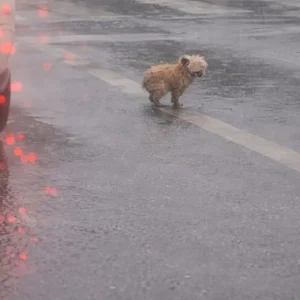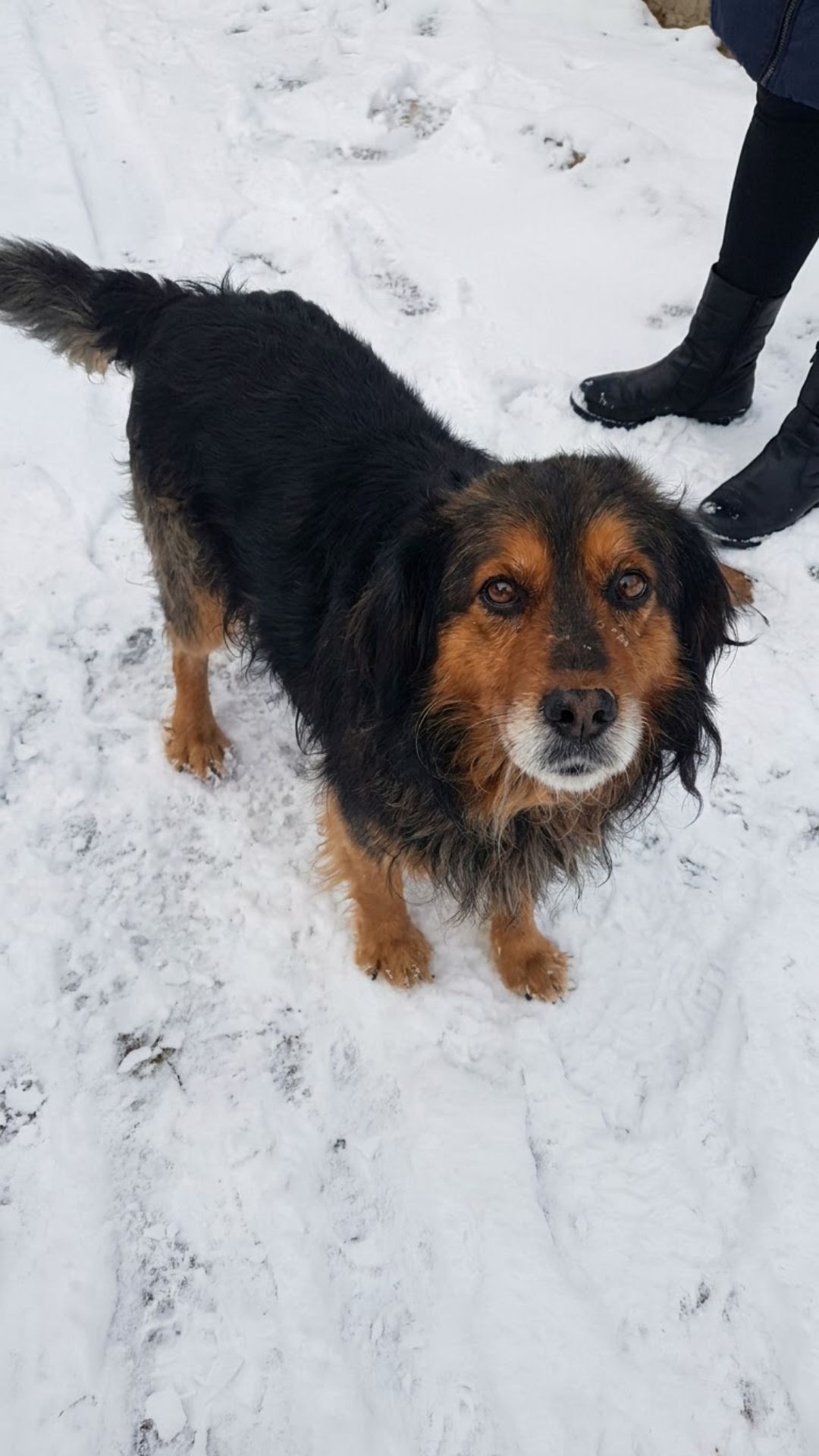
In the middle of a harsh winter, at an hour when most dogs were curled safely beside warm fireplaces, an older dog later named Barney lay all alone in the snow. Left outside to fend for himself in the bitter climate, his aging body was rapidly losing the strength needed to survive the freezing temperatures.
By the time a kind woman came across him, Barney was completely exhausted and shivering from the cold. Unable to do much more than rest in the drift, he looked up at her with teary, sorrowful eyes—a quiet, unmistakable plea for help that stayed with his rescuer long after that day had passed.
Refusing to leave him to the winter weather, the woman immediately gathered the freezing dog and rushed him to a veterinary clinic. As Barney sat on the examination table waiting to learn what the elements had done to his health, his rescuer gently cradled his face in her hands—prompting him to wag his tail for the very first time, even as his diagnosis remained uncertain.
VIDEO: How an Eight-Year-Old Dog Left in the Winter Snow Found Warmth and Trust Again
What the Veterinarian Discovered About His Months in the Cold
A thorough examination at the clinic soon revealed just how long Barney had been fighting to survive on his own. According to the veterinarian, the dog was roughly eight years old and had been living out in the cold for months rather than days.
Those winter months had left visible traces across his aging frame. Along with the cataracts beginning to cloud his eyes from old age, Barney carried old bite scars across his muzzle—quiet evidence of the times he had been forced to compete with other stray dogs over scarce scraps of food in the snow.
Yet considering how long he had endured the hunger and freezing weather, the medical findings brought a wave of relief to the examination room.
Aside from exhaustion and a parasitic infection that required three days of inpatient care at the clinic, Barney had survived the winter without life-threatening damage. Throughout those initial days of treatment, the eight-year-old dog proved remarkably gentle, showing not a single sign of aggression toward the people tending to him.
“The marks an older animal carries from the streets tell the story of how hard they had to fight to survive, yet their gentleness shows how little of that harshness ever reached their heart.”

Stepping Back Into the Snow Without Fear
Once his three-day stay at the clinic was complete, Barney’s rescuer brought him home to begin a quieter chapter of life. With his strength returning after a couple of days together, she decided to take him out for a gentle walk.
Stepping back outdoors into the winter air carried an understandable worry. After spending months freezing and hungry in the snow, there was every reason to think that the sight and feel of the white ground might trigger fear or distress in the older dog.
Barney, however, handled the outing with quiet composure.
Walking calmly beside the woman who had saved him, he moved through the snow without panic, as though simply having a trusted person at the other end of the leash changed the meaning of the cold around him. Smart, easygoing, and attentive, he quickly won the affection of everyone he met along the way, frequently turning his head to look up at his rescuer with steady, grateful eyes.
For a dog who had spent so long wondering where his next meal would come from, even the simplest daily routines became something to savor.
A Quiet Fear of Losing the Warmth He Had Found
As the days passed and Barney settled into the warmth of being cared for, he gradually began interacting with other dogs again. Out on the streets, where food was scarce, other dogs had often meant competition and conflict; now, with his belly full, he was able to greet them peacefully and make friends.
Still, one small habit revealed that the memory of being left behind had not completely faded.
Whenever another dog approached his rescuer too closely, Barney grew uneasy and stepped in to keep them away from her side. Whether he was worried that another dog might take her affection or simply afraid of being replaced and abandoned a second time, he made it clear that he did not want to lose the person who had pulled him from the snow.
Seeing his hesitation, his rescuer made sure to reassure him every day that he was never going to be left behind again.
A few days later, she brought Barney back to the veterinary clinic for a follow-up checkup. The visit brought more good news: he tested completely negative for serious illnesses like parvovirus, needing only nutritional tonics and daily eye drops to care for his aging eyes.
Though he remained a patient, well-behaved dog, Barney made no secret of the fact that he disliked medical handling at the clinic—staying close to his rescuer and waiting eagerly for her to take him straight back home.
For an eight-year-old dog who had once lain shivering in the snow while the rest of the world stayed warm indoors, the cold months of scavenging and fighting for scraps were finally over. The sorrow that had once filled his eyes on the day he was found had given way to the calm security of a dog who knew exactly where he belonged.

Surrounded by warmth, regular care, and the steady presence of the woman who had held his face on that first day at the clinic, Barney is finally living the quiet, comfortable life he had waited so long to find.
“When an older dog is rescued from the cold, they do not ask for much—only the quiet certainty that the hand holding theirs today will still be there tomorrow.”