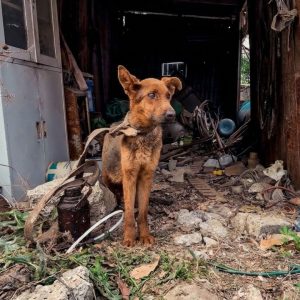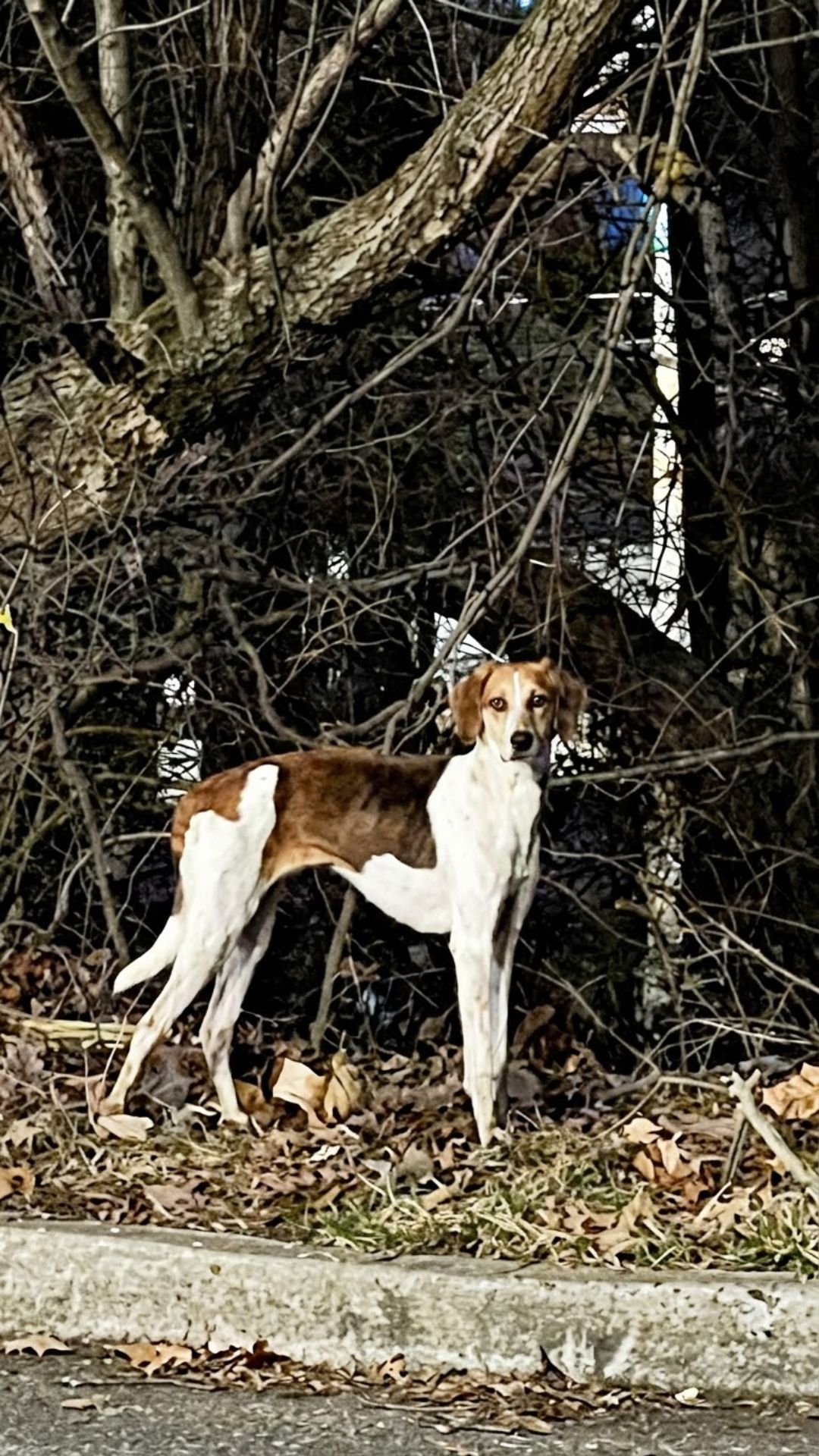
Leia was a sweet, deeply gentle dog who had spent seven comfortable years in a loving Maryland home after being rescued from a puppy mill as a tiny newborn. But on an autumn afternoon, a casual visit to a neighbor’s house unexpectedly shattered her quiet life. A door was accidentally left open by a visitor, and the scent of local deer lured Leia outside, where she quickly vanished into the surrounding landscape.
For weeks, her family scoured the area, hanging over a hundred signs and driving through the dark every night, terrified she had been stolen. In reality, the sheltered dog had simply slipped into a profound state of panic. Out in the wild, her primal instincts completely overtook her gentle personality, shifting her brain into a rigid survival mode that focused entirely on finding food and avoiding all human contact.
It took three agonizing weeks for a passing couple to finally spot her standing deep in the local woods. Her family rushed to the location, spotting their beloved dog just fifty feet away through the trees. But when Leia looked back at the people who had raised and loved her for years, her survival instincts overrode her memory, and she immediately turned and fled deeper into the brush.
VIDEO: Leia’s 100-Day Journey Back Home
A Shift in Strategy
Realizing that chasing her would only push her further away, the family enlisted the help of Donna, a dedicated volunteer from a local lost pet group. Donna understood that a dog locked in survival mode could not be coaxed out with familiar voices or past affection.
Instead of pursuing her, they had to rely entirely on patience. They quietly set up feeding stations and trail cameras, establishing a non-threatening routine to slowly draw her out of hiding.
“When fear rewires a mind, patience becomes the only way to invite trust back in.”
The wait continued as the temperatures dropped sharply. Her family spent their nights agonizing over the thought of their sheltered dog huddled alone in the freezing woods, losing weight and unable to sleep comfortably. While they accidentally caught a persistent local possum in their humane traps more than once, Leia remained elusive, constantly moving to feel safe.
A Glimpse Through an Office Window
Two days before New Year’s Eve, a massive breakthrough arrived. A woman named Amanda spotted a dog lingering at the edge of the woods outside her office window, roughly four miles away from the initial search zone. Connecting the sighting to one of the family’s missing posters, Amanda immediately reached out to report the location.

With a confirmed territory, Donna deployed a specialized, six-by-twelve-foot enclosure rigged with a laser tripwire.
Leia remained deeply suspicious of the large metal structure. She would cautiously approach the edges to eat the provided food, captured daily on the trail cameras, but she stubbornly refused to step far enough inside to trigger the door. For two grueling weeks, her caretakers simply had to wait as the cautious dog slowly acclimated to the pen’s presence.
Then, the call finally came. Donna had checked the trap and confirmed that Leia had safely crossed the laser line.

Recognizing the Hands That Raised Her
When her mother walked down into the woods and approached the heavy metal enclosure, there was a lingering moment of uncertainty. Weeks earlier, Leia had run from her own family. Now, after nearly 100 days fending for herself in the wild, no one knew how much of her former self remained.
But as her mother knelt by the wire and spoke to her, the invisible wall of panic finally broke.
Leia sat down in the dirt, carefully sniffing and licking the familiar hands reaching through the metal gaps. She began to whine, desperately pawing at the heavy door, her body language instantly shifting from a wild animal trapped in a cage to a lost pet begging to go home.

The ordeal left lasting physical and psychological marks on the dog. Having lost a third of her body weight, returning home meant facing new anxieties, including a noticeable hesitation to walk through open doorways.
Yet, the trauma also shifted how she sought comfort.
Before her escape, Leia was perfectly content sleeping independently at the foot of the bed. Now, she insists on being snuggled right up against her family, anchoring herself to their physical presence as if to ensure they won’t disappear while she rests. Her mother watches these changing habits with a tight heart, absolutely determined to protect the fragile peace they fought so hard to reclaim.
“The deepest scars of a harsh journey often show up in how tightly a survivor holds on to the safety they almost lost.”