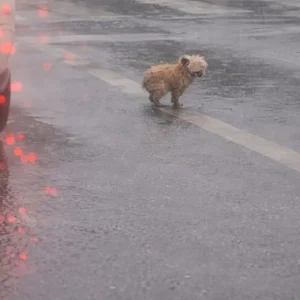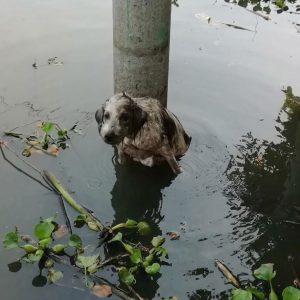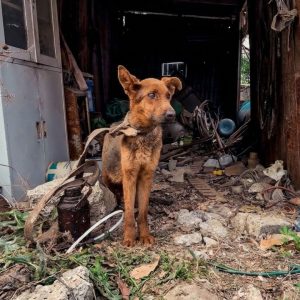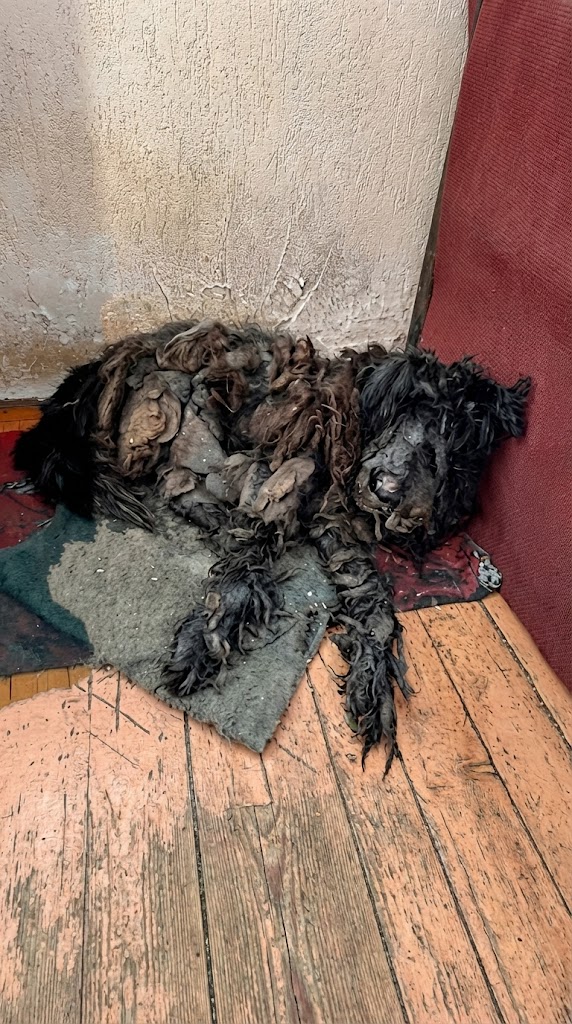
When rescuers learned about Chekia, he had been living for a long time in the entrance of a building after being abandoned by his owner. His body was hidden beneath severely matted fur, with hardened glue-like material making his already difficult condition even worse. The little dog had been left in a situation where even the simplest things, including seeing the world around him, had become a struggle.
His condition was heartbreaking. The tangled coat covered much of his body, and the hardened material made removing it without causing further harm a delicate task. One of his eyes was severely affected, pressed inward and in need of special attention. Chekia also had a high temperature, raising further concerns about his health. After being overlooked for so long, he finally had someone willing to help.
A woman brought his situation to the attention of rescuers, and arrangements were made to take him to a clinic that evening. There was a great deal to address, from his painful-looking coat to the damage around his eye and his overall condition. Before Chekia could begin a new chapter, the people caring for him would have to work carefully through each problem and give his body time to respond.
VIDEO: Chekia’s Journey From Severe Neglect to a Life Filled With Love
The Careful Work of Helping Chekia Heal
At the clinic, Chekia’s condition presented several challenges. His fur had become so tightly matted and hardened that trimming it required considerable care. The rescuers could not simply remove everything quickly without risking injury to the skin beneath.
They also had to pay particular attention to the damaged eye. The fur surrounding it needed to be trimmed first so that the area could receive the attention it required. With his eye already in such a concerning condition, careful handling was essential.

Chekia was then placed under special care while the team worked to stabilize his condition and support his recovery. The immediate priority was no longer simply getting him cleaned up. He needed medical attention, rest, and close observation to see how he would respond.
The next day brought a small but encouraging development. Chekia began eating again, although he could manage only a little at first. It was not a dramatic transformation, but being able to take in some food gave his caregivers an early sign that he was beginning to respond to their efforts.
His eyesight remained a difficult part of the story. After treatment, Chekia could see the world with only one eye, a reminder that some of the damage he had suffered could not simply be reversed.
“Recovery is not always about returning to the way things were before. Sometimes, it begins with helping an animal feel comfortable enough to take the next small step.”
For Chekia, those first steps involved more than medical treatment. His caregivers also spent time talking to him, hoping that familiar voices and gentle attention would help him become more comfortable around people.

A Week Later, the Changes Became Easier to See
After about a week, Chekia’s wounds had healed, and his overall condition had improved considerably. Follow-up blood tests also showed that his liver parameters had returned to normal, offering another encouraging sign of progress.
Ten days after his rescue, Chekia received permission to leave the clinic and go home with his caregiver. After spending so much time in a vulnerable condition, he finally had the opportunity to recover in a more familiar, caring environment.
The difference became especially noticeable when he began going outside for walks. Chekia appeared happy to explore, and his legs grew stronger with each passing day. Before long, he was able to run again.
These everyday activities carried a significance of their own. Walking and running were not just signs that his strength was returning; they gave Chekia opportunities to experience life beyond the confined entrance where he had once been left.
His relationship with people also began to change. The person caring for him continued offering attention and affection, giving him opportunities to become comfortable with human contact at his own pace.
Gradually, the frightened dog began showing more trust. When someone touched him, he wagged his tail. He also began greeting people, an affectionate behavior that stood in striking contrast to the isolation described before his rescue.
The wagging tail could not undo his earlier suffering or restore the sight he had lost. But it showed that Chekia was beginning to engage with the people around him in a very different way.
Chekia Finally Has a Place to Call Home
By the time Chekia settled into life with his new caregiver, his recovery had brought changes in his health, mobility, and interactions with people. His wounds had healed, his blood test results had improved, and he could walk and run with increasing strength.

Most importantly, he was no longer left to face his days alone in the entrance of a building. He now had someone willing to care for him and make room for his needs, including the lasting effects of his damaged eye.
His journey was not a return to perfect health. Instead, it was a gradual adjustment to a life in which care, attention, and affection had become part of his daily experience.
“Sometimes, the clearest sign that a frightened animal is beginning to feel safe is not a dramatic moment, but a tail that keeps wagging when a familiar hand reaches out.”
Chekia now has the chance to enjoy the simple pleasures that once seemed far beyond reach: going for walks, running on stronger legs, greeting people, and receiving the affection of his new mother. His past remains part of his story, but it no longer defines every moment of his life.
For a dog who had spent so long neglected and struggling, being able to welcome human contact again is a meaningful change. And each time Chekia wags his tail when someone reaches out to him, there is a small reminder of how far he has come.